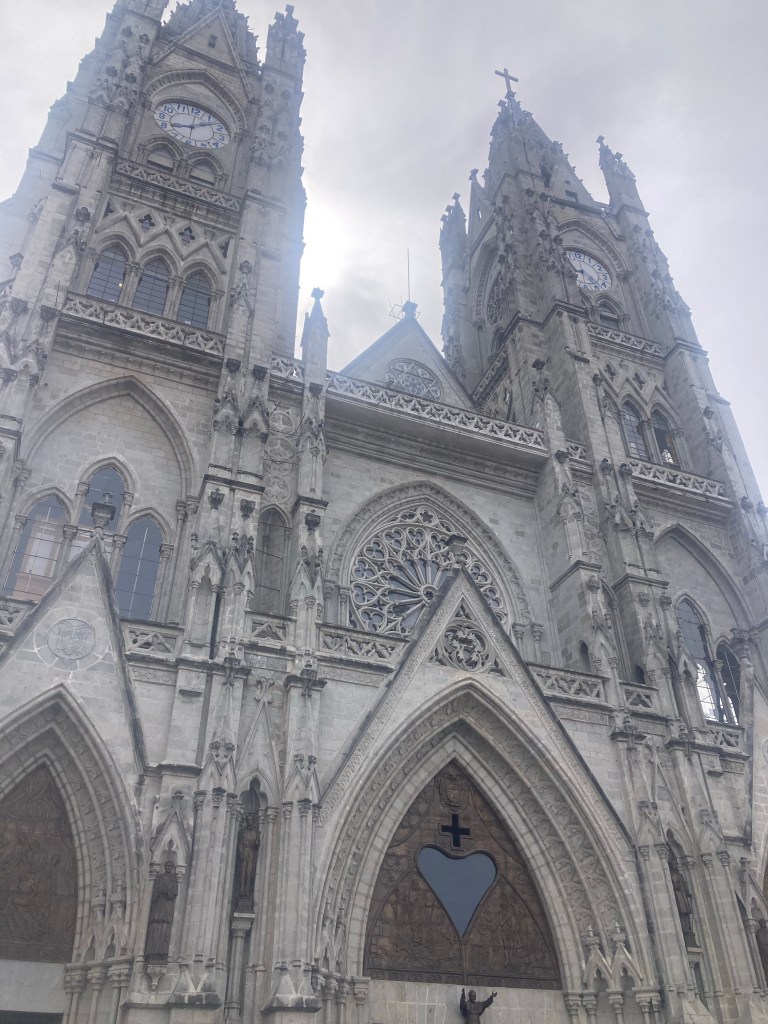
As a Protestant, white woman who attends an elite, Catholic, primarily white institution and hails from a ninety-eight percent white area, I feel inadequate to even attempt writing a piece on white supremacy in the Catholic Church. And as a Christian, I feel it is my responsibility and a requirement of my faith to speak out against any injustice, especially those committed in the name of my God, for faith without works is dead, and the world will know my savior’s name by how I live my life. Therefore, I find it imperative that the Christian community acknowledge and address the very white elephant in the room – the systemic racism of the Catholic church.
Before I continue, it is vital that I address the fellow Protestants in the room as to why an issue of the Catholic Church pertains to us. While I understand and acknowledge that there are plenty of differences between the services, practices, and theologies of the Catholic Church with that of the many Protestant denominations, it’s essential to note that for roughly fifteen hundred years, the Catholic Church was the epicenter of Christian power and still holds a strong hand in the Christian world, such as setting Easter and other Christian holidays. When Martin Luther secured his ninety-five theses to those church doors in Germany, what many consider to be the start of the Protestant Reformation, he was protesting against the Catholic Church, meaning that the roots of Protestantism come from Catholicism in both scriptural translations and traditions and subverting hierarchical authority within the institution. Both adopting and undermining ideals from the Catholic Church stems from being rooted in the Catholic Church as its foundation, thus the history, legacy, and crimes of the Catholic Church are largely the history, legacy, and crimes of Protestantism. Therefore, Protestants must be willing and ready to stand alongside their Catholic siblings to address and amend the grievances of the Catholic Church, including its white supremacy and colonization.
The first time I heard about the grievances of the Church in regards to colonization was at my Jesuit university this past spring. Attending a lecture on faith and feminism, I listened to leading scholars and authors discuss the various dilemmas and errors the Church has committed over its long history, and when asked what she would like to see the Catholic Church do in regards to reconciliation, one of the speakers said she would like to see the Catholic Church decolonize. Confused, I sat there puzzled, trying to understand how the Catholic Church was responsible for the white settlers and supremacy that had murdered countless of indigenous peoples, enslaved millions of Africans, and deforested and polluted these breathtaking lands. I knew that many of these white, European Christians used Scripture, specifically Paul’s writings, to justify the enslavement of Black Africans, but I didn’t understand what this had to do with the institution of the Church or Christianity as a whole. Regardless of how open minded we are, sometimes the only way to see our privilege and pass our blindspots is to step outside our own perspective by walking in someone else’s shoes. For me, travel has always been a way to enhance my footwear collection.
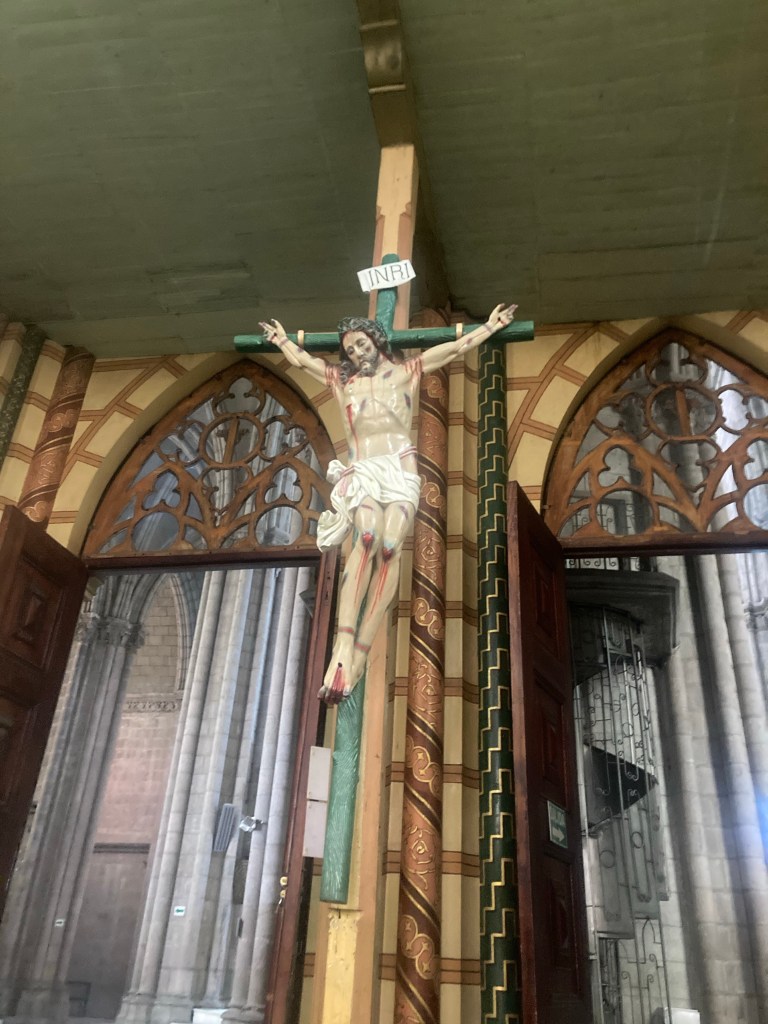
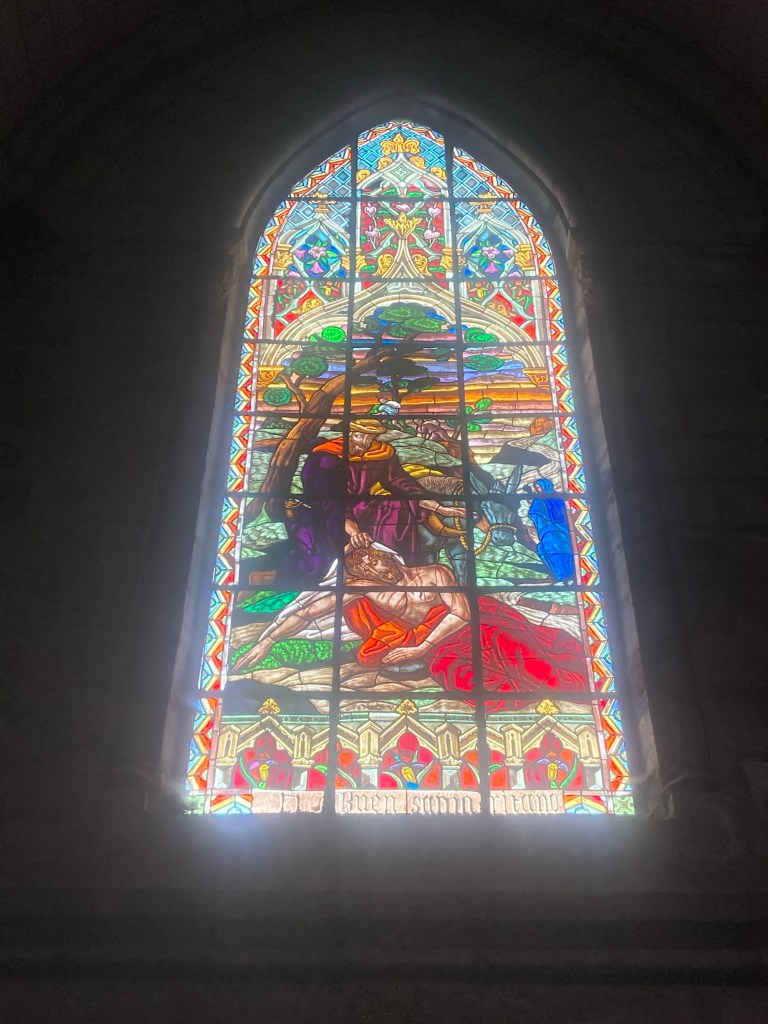
On my first free Sunday in Quito, Ecuador, I decided to visit the city’s basilica and attend its mass, since I had always wanted to experience a Catholic religious service and my group had missed the opportunity to explore the grand church earlier in our program. So when I walked under the looming and carefully constructed stone vaulted ceilings, I stood there in awe, humbled by the sheer size of the nave and wishing for the mass to never start so I could quietly observe its wondrous mystic. Yet after I moved passed this state of starstruck as more and more Ecuatorians – mestizos, people of both indigenous and white races, and afroecuatorianos – began crowding into the upper rows of the sanctuary, I noticed that amongst the many statues, paintings, and stain glass windows depicting Jesus, Mary, and the disciples, none of them even remotely resembled the physique of the people in the room. Instead, every image of Christ, the Virgin, and the apostles looked like me – the racial minority, the foreigner, and the only white person in the room. Shocked and slightly horrified, I sat in the middle of mass semi-presently, trying to wrap my head around why the people of Ecuador would install a dirty blonde, blue-eyed Jesus in every nook and cranny of their national cathedral, when only five percent of their population has those physical characteristics. After all, various cultures around the world typically depict Christ as a member of their own race to highlight Jesus’ humanity and connection to said people. It didn’t make sense why the Ecuatorians would paint Jesus as a foreigner with skin whiter than mine. Until it hit me; this church and this religious establishment was built by foreigners.
Ecuador was one of the many nations colonized by Spain in the sixteenth century before securing its independence in 1830. This period of colonization was simultaneous with another crucial era in world and Christian history – the Spanish Inquisition, where the Spanish monarchy established their own branch of the Papal Inquisition that sought to eradicate heresy in the Church. The Spanish branch, however, led by King Ferdinand and Queen Isabel, took the Church’s mission a step further by seeking to create new converts by any means necessary. This included colonizing the Americas, including Ecuador, Queen Isabel going so far as to declare that the whole point of colonization was to convert the indigenous Americans, more often than not by force with their infamous requerimientos – accept our God as your God and the King of Spain as your king or die by the sword. In the midst of such religious zeal – enslaving Africans and shipping them across an ocean for the Spaniards’ own selfish gain, raping and forcing marriage upon indigenous woman and, consequently, creating the most dominant race in South America, the mestizo, and pillaging the magnificent and essential natural resources of the Americas – the white Christians of Europe became the very thing they claimed to be fighting against – heretics.
Although I do not have the space to adequately describe all of the Catholic Church’s crimes, especially in regards to colonization, I have another article here that explains more of the Church’s history and encourage you all to take a look, continuing to educate yourselves on this topic. As white Christians, we have the privilege of not knowing our crimes, of not being aware of how our system has inherently favored us and discriminated against people of color, particularly in predominantly non-white and non-Western nations. Imagine what it’d be like if you never saw a Jesus that looked like you, if you didn’t see a God who resembled your skin tone, your eye color, and your hair texture. Would you be able to see yourself as a child made in the image of God? Would you be able to believe that God created all people equal if you only saw one race portrayed as the divine? Just like with books, movies, and television, representation matters and our image of God must include all such depictions, especially in non-white communities.
The Catholic Church has already been under scrutiny for several years now for failing to address past grievances, not only as individual members but as a structure and a theology holistically. If the Christian community fails to acknowledge these crimes, address them as they are – violations of human rights committed in the name of the God of justice – and amend these hurts, the world will only see us supporting a world hierarchy that offers white people privilege and everyone else discrimination. We are called to be in the world, not of the world, and that includes the world’s systems of abuse and atrocities. We must ask those our past siblings wounded for forgiveness and God for guidance in our next steps, for our next steps will determine if people come running to Jesus for healing or walk away forever because we abused the name of God. The choice is ours, my friends; and maybe this time, we’ll get it right.
 Last Love
I love this Kam! This is probably one of my very favorite things you have written. It’s done so humbly and laid out in a way that zeroes in on the very heart of the matter. ❤️you should be very proud of yourself, really well done and beautiful.
LikeLike